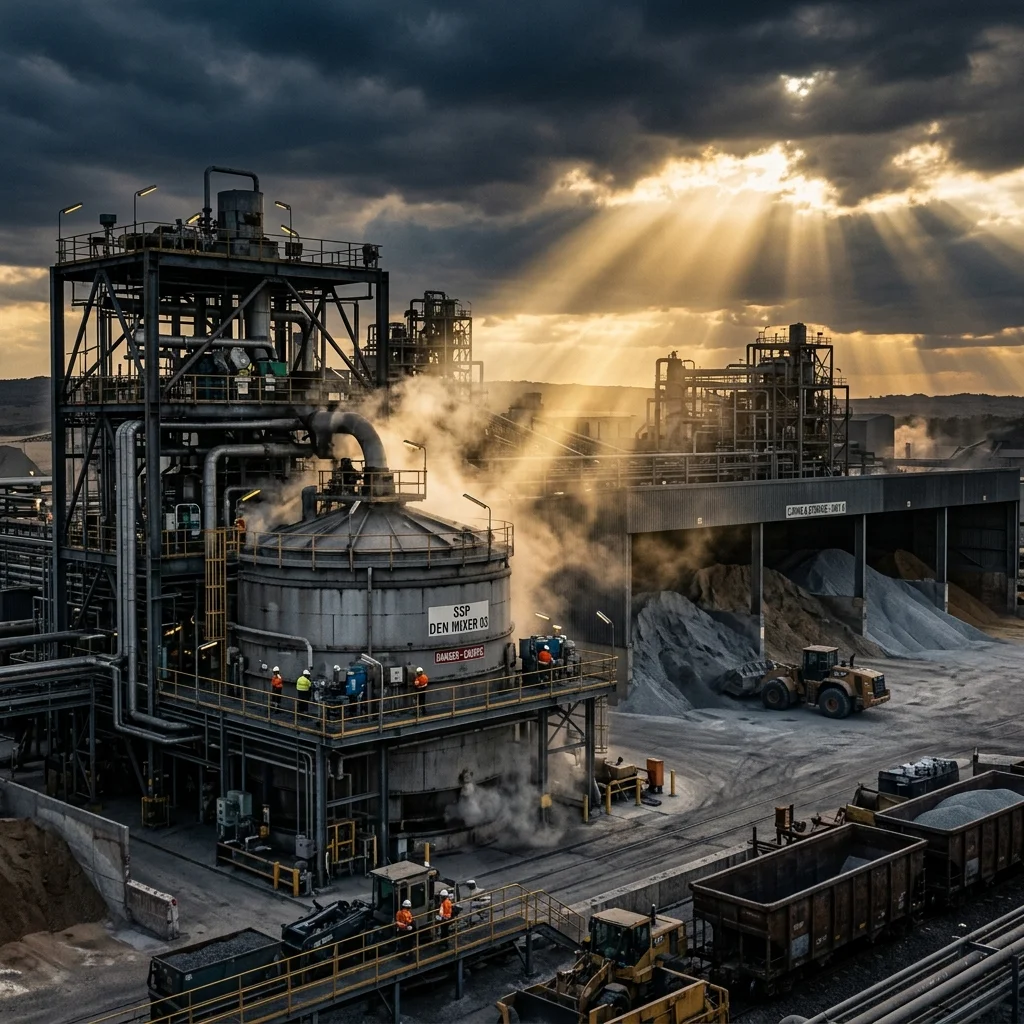
Single Superphosphate
Technology Specialist

Single Superphosphate — SSP

Single Superphosphate Plant Acidulation, Curing & Off-Gas Scrubbing Support

2–5 minutes
Reaction Time
2–4 weeks
Curing Period
16%–22%
P₂O₅ Content
11%–12% S
Sulfur Content
Chemical Overview

Digesting the Chemistry & Industry Role

Single Superphosphate (SSP) is the oldest and simplest phosphate fertilizer. It is produced by reacting ground phosphate rock with sulfuric acid. SSP provides phosphorus, sulfur, and calcium — making it valuable for sulfur-deficient soils.

Despite being a mature technology, SSP remains economically competitive in many markets due to low capital cost, simple process, and the ability to use lower-grade phosphate rock compared to DAP/MAP production.

Successful SSP plant operation depends on managing rock-to-acid reaction ratios, optimizing pile curing dynamics to reduce free acidity, and ensuring high-efficiency off-gas scrubbing for fluorine containment.

Quick Reference Card
Chemical Formula
Ca(H₂PO₄)₂·H₂O + CaSO₄
Classification
Simple Superphosphate
Physical State
Powder / Granular Compound
Primary Feedstock
Phosphate RockSulfuric Acid (65-75% concentration)
Main Application
Low-Cost Phosphorus & Calcium Soil Nutrition
Process Flow

The Production & Conversion Sequence

01

Acidulation Mixing

Finely ground phosphate rock and 65-75% sulfuric acid are metered and intensely mixed in a continuous paddle mixer.

02

Slurry Digestion Den

The liquid slurry is discharged onto a slow conveyor den where it reacts and solidifies into a solid block over 15-30 minutes.

03

SSP Excavation

A rotary cutter at the end of the den cuts the solid block into fine powder, which is conveyed to the curing shed.

04

Shed Curing

The green SSP is stored in large piles for 2–4 weeks to complete the rock digestion and allow excess moisture to evaporate.

05

Optional Granulation

Cured powder SSP is crushed, granulated in a rotary drum with steam and binder, dried, and screened for bagging.

Major Infrastructure

Key Equipment & Machinery Assets

Continuous Den Mixer

High-shear double-shaft mixer designed for rapid, uniform contact between rock dust and sulfuric acid.

Continuous Solidification Den

Slow-moving conveyor slat den allowing the react slurry to solidify and gaseous fluorine to vent.

Fluorine Scrubbing Towers

Multi-stage gas cleaning system designed to capture hydrofluoric acid and silicon tetrafluoride.

Curing Shed Cranes

High-capacity overhead crane and scraper systems managing heap turning for complete curing.

SSP Granulator

Rotary drum or pan granulator adding water/steam to form hard, transportable superphosphate granules.

Critical Risk Areas

Commissioning Challenges & Startup Risks

Hurdle 01

Acidulation ratio (acid to rock) must be precisely controlled — too much acid creates a wet, sticky product; too little leaves unreacted rock.

Hurdle 02

Curing time and conditions affect final product quality — incomplete curing leads to high free acid content.

Hurdle 03

Granulation of SSP requires careful control of moisture and temperature to achieve target granule hardness and size.

Kafaah's Field Expertise

Operated. Started. Optimized.

Kafaah's team has operational experience with SSP production, including acidulation optimization, curing management, and granulation performance improvement.

We troubleshoot chemical formulation imbalances, design dust mitigation and scrubbing systems, and help facilities upgrade powder operations to granular production.

Request Technical Consult

Optimizing or Commissioning a Single Superphosphate Plant?

Partner with specialized engineers who have directly operated and commissioned the exact same systems. Let's discuss your project targets.

Consult with our experts