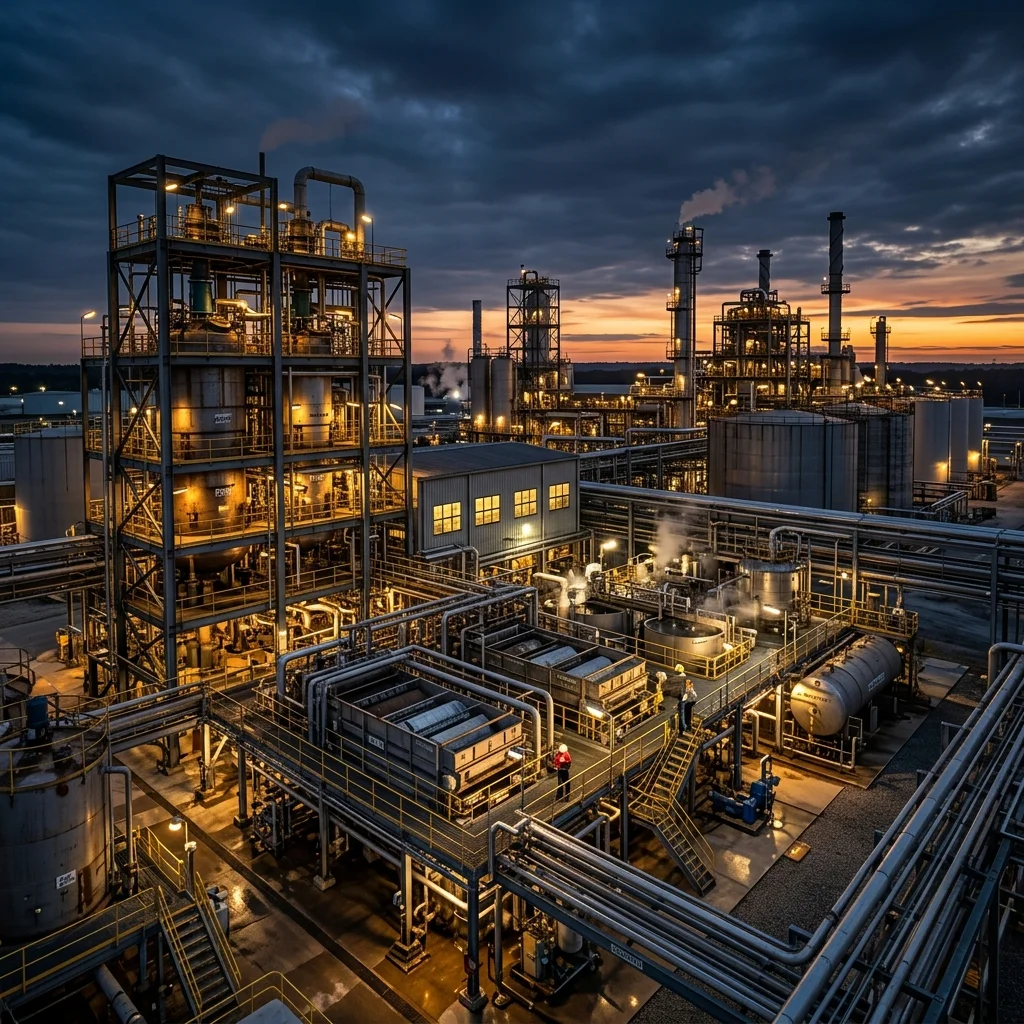
Phosphoric Acid
Technology Specialist

Phosphoric Acid — H₃PO₄

High-Efficiency Phosphoric Acid Plant Digestion, Filtration & Concentration Optimization

28%–54% P₂O₅
Acid Concentration
> 98.5%
Rock Conversion
5.5 t/m²·day
Filtration Rate
75°C–80°C
Reaction Temp
Chemical Overview

Digesting the Chemistry & Industry Role

Phosphoric acid (H₃PO₄) is the primary intermediate in phosphate fertilizer production. It is produced by reacting phosphate rock with sulfuric acid in what is known as the wet process.

The wet process is the dominant production route worldwide, producing merchant-grade acid (MGA) at 54% P₂O₅ concentration. Phosphoric acid is used to produce DAP, MAP, TSP, and NPK fertilizers.

Commissioning and operating a phosphoric acid plant is highly challenging due to the heavy abrasive nature of rock slurries, severe corrosive properties of hot acids, and crystallization kinetics of calcium sulfate.

Quick Reference Card
Chemical Formula
H₃PO₄
Classification
Mineral Triprotic Acid
Physical State
Liquid (typically 54% P₂O₅)
Primary Feedstock
Phosphate Rock (Apatite)Concentrated Sulfuric Acid
Main Application
DAP, MAP, and TSP Fertilizer Production
Process Flow

The Production & Conversion Sequence

01

Rock Feeding & Slurry

Finely ground phosphate rock is metered into the reactor along with recycled weak phosphoric acid to form a feed slurry.

02

Acidulation Reaction

Concentrated sulfuric acid is added to decompose the rock, forming phosphoric acid and calcium sulfate crystals.

03

Slurry Flash Cooling

The highly exothermic reaction heat is managed by circulating slurry through a vacuum flash cooler to maintain 78–82°C.

04

Vacuum Filtration

The slurry is separated on the vacuum filter. Active washing recovers water-soluble P₂O₅, producing clean gypsum cake.

05

Acid Concentration

The filtrate at 28% P₂O₅ is transferred to forced-circulation evaporators where vacuum boils off water to reach 54% P₂O₅.

Major Infrastructure

Key Equipment & Machinery Assets

Digestion Reactor

Multi-compartment or single-tank reactor designed for rock dissolution and calcium sulfate crystallization control.

Vacuum Flash Cooler

Evaporative cooling system maintaining stable slurry temperature to govern crystal morphology.

Tilting Pan Filter

High-capacity horizontal rotary vacuum filter providing multi-stage counter-current washing of gypsum cake.

Forced Circulation Evaporator

High-vacuum heat-exchanged evaporator concentrating weak 28% acid up to 54% P₂O₅ merchant grade.

FSA Recovery Unit

Scrubbing towers designed to capture fluorine gas releases and produce hydrofluorosilicic acid byproduct.

Critical Risk Areas

Commissioning Challenges & Startup Risks

Hurdle 01

Reactor temperature and residence time control are critical — deviation leads to poor crystal formation and filtration bottlenecks.

Hurdle 02

Filter performance is the most common bottleneck during startup. Cloth selection, cake washing efficiency, and vacuum system performance must be optimized simultaneously.

Hurdle 03

Acid concentration through evaporation requires careful management of scaling (silicofluoride and sulfate deposits) from the first day of operation.

Hurdle 04

Phosphate rock feed preparation (grinding, slurry preparation) must be matched to reactor requirements — particle size distribution directly affects reaction efficiency.

Kafaah's Field Expertise

Operated. Started. Optimized.

Kafaah's team has operated phosphoric acid plants using both dihydrate and hemihydrate processes.

Our experience includes reactor optimization, filtration performance improvement, and evaporator descaling program development.

We troubleshoot filtration problems, perform chemical digestion audits, and train operators to recognize crystallization anomalies before they disrupt production.

Request Technical Consult

Optimizing or Commissioning a Phosphoric Acid Plant?

Partner with specialized engineers who have directly operated and commissioned the exact same systems. Let's discuss your project targets.

Consult with our experts