The Structural Gap in Industrial Projects
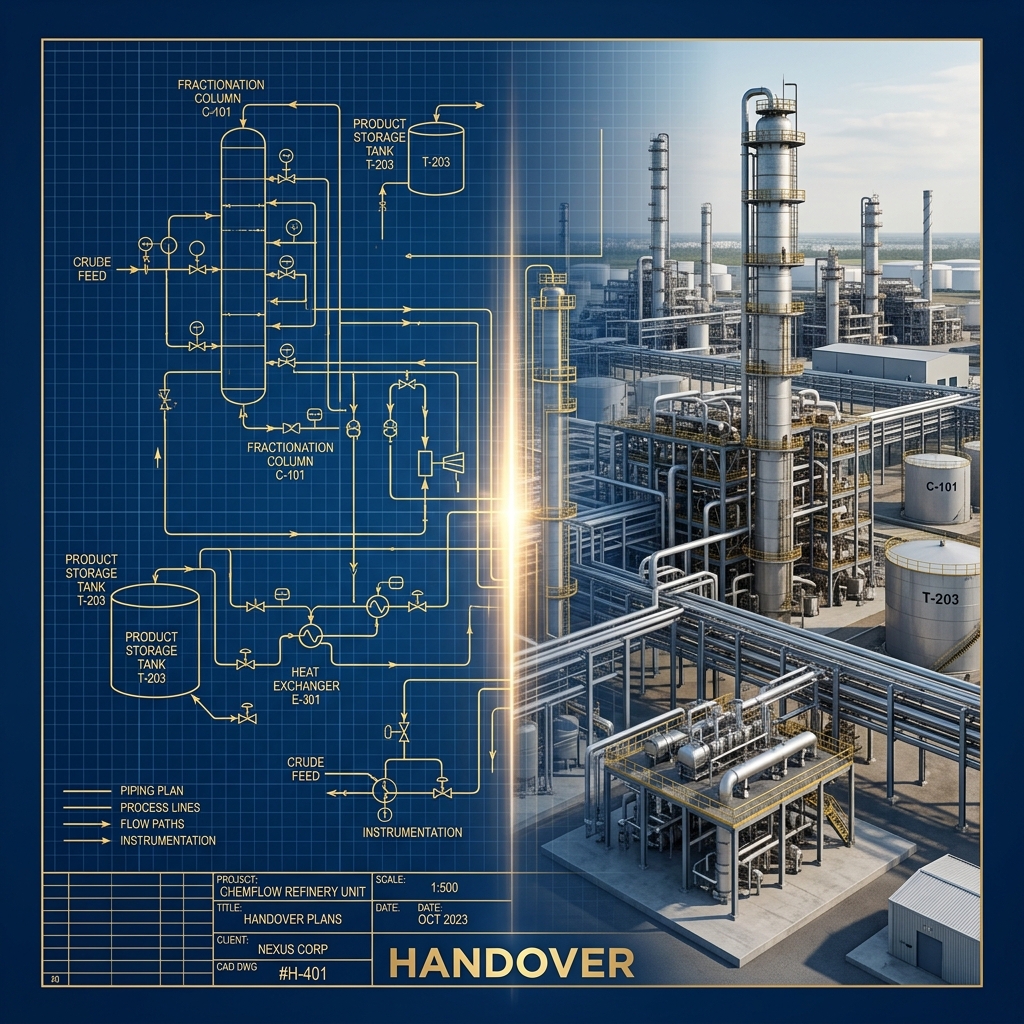
There is a structural discontinuity at the heart of most industrial plant projects. The organization that builds the plant and the organization that will operate it are completely different. The transfer of knowledge, responsibility, and operational understanding between them is consistently undermanaged.
This is the handover problem. And it is responsible for more long-term plant underperformance than any engineering or equipment design error.
Signs of a Bad Handover
The symptoms of a legal-only handover are familiar: * The Performance Test Paradox: A plant that passes its nominal 72-hour performance test under optimized conditions but struggles to maintain design output under normal operating conditions. * Procedure-Bound Operators: An operations team that knows how to follow operating procedures in normal conditions but lacks the process understanding to respond when temperatures drift or concentrations drop. * Reactive Maintenance: A maintenance team that is permanently reactive because the baseline vibrations and mechanical limits were never established during cold and hot testing.
Reframing Handover as Knowledge Transfer
Closing this operational gap requires a deliberate investment by the plant owner in three areas:
- Process-Specific Training: Operator training must move beyond classroom lectures. It must involve hands-on, plant-specific scenario training where operators learn how to diagnose deviations.
- Operational Baseline Documentation: The plant's actual operating envelopes, valve positions, and temperature profiles must be documented during the first weeks of operation before wear and workarounds alter the baseline.
- Early Operations Technical Support: Plant owners must retain specialized engineering support for the first three to six months of commercial operations. This is the period when design anomalies are discovered and must be corrected before they become permanent operational constraints.