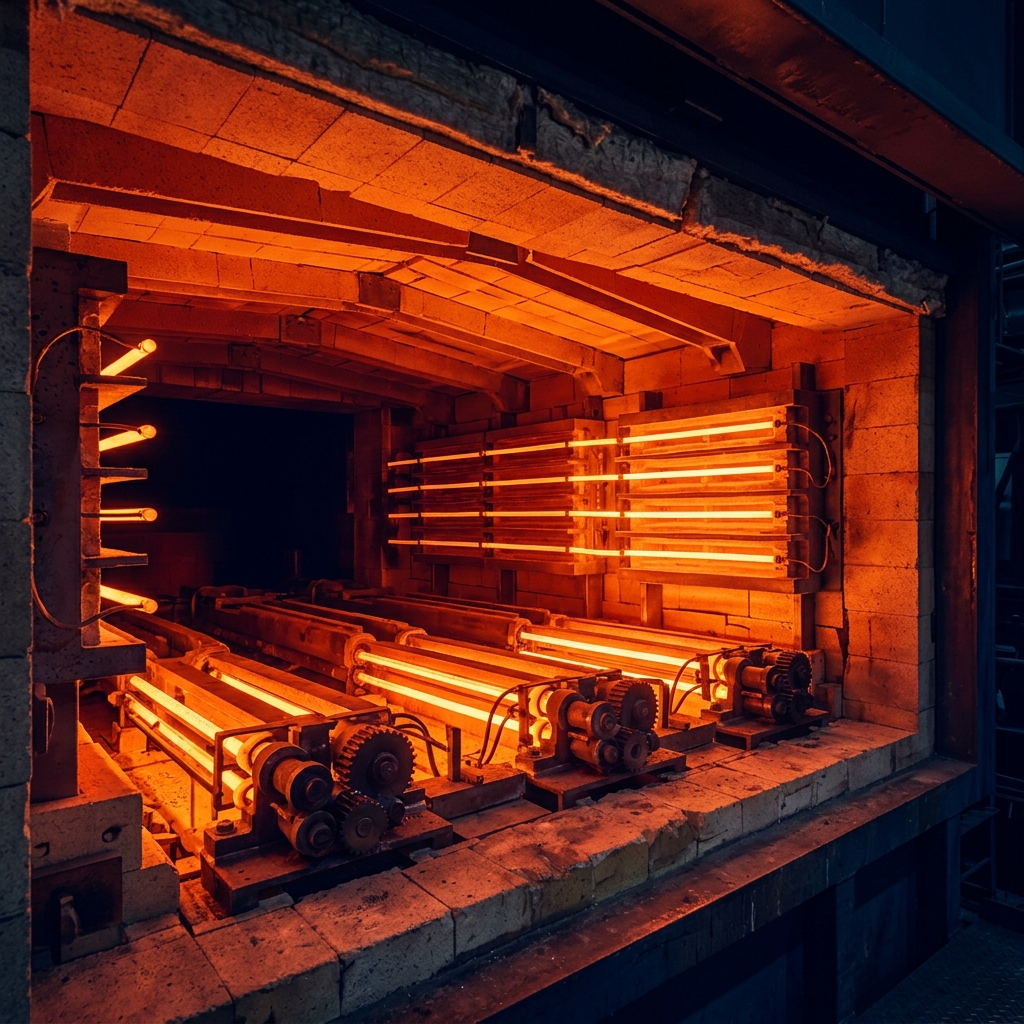
Common Pitfalls in Mannheim Furnace Refractory Curing
Technical Troubleshooting

Common Pitfalls in Mannheim Furnace Refractory Curing

March 2026
5 min read
Kafaah Operations

Incorrect curing of the SOP furnace refractory leads to premature failure and costly downtime. We review the standard procedure and where it usually goes wrong.

Mannheim Furnace Refractory: Curing to Prevent Failure

Mannheim furnaces operate at extreme temperatures (500°C to 650°C) with highly corrosive reactants (potassium chloride and sulfuric acid producing potassium sulfate and hydrochloric acid gas). The silica brick and high-alumina refractory lining inside the furnace chamber are critical assets. Proper curing during the initial heating phase determines whether the bricks will survive years of operation or crack within months.

The Curing Curve

Refractory curing requires a precise thermal schedule to drive off free water first, and then chemically bound water.

  • Ambient to 110°C**: Rate not exceeding 10°C/hr. Hold at 110°C for 24 hours to evaporate free moisture.
  • 110°C to 350°C**: Rate not exceeding 15°C/hr. Hold at 350°C for 18 hours to release bound water without creating internal steam pressure.
  • 350°C to Operating Temp (approx. 550°C)**: Rate of 20°C/hr. Hold at operating temperature for 24 hours for thermal equilibrium.

Common Failures in the Field

In multiple troubleshooting interventions, we discovered operators accelerating the curing curve to meet construction deadlines. This causes "spalling"—where trapped moisture vaporizes into high-pressure steam, cracking the bricks from within. Our team enforces certified digital temperature monitoring and independent gas burner calibration to prevent refractory failures.
Key Takeaways

  • Slow heating curve ensures refractory bricks release free water safely.

  • Rushing oven temperatures causes spalling and structural crack failures.

  • Digital thermocouple maps provide certified monitoring profiles.

Facing a Plant Challenge?

Engage our process engineering lead for startup or optimization advice.

Discuss Your Plant
Kafaah Industrial Capabilities

From Design Review to Stable Operations

We support complex industrial facilities through a specialized team of fertilizer and inorganic chemical plant specialists.

Technical Services

11 Services Across Project Lifecycles

From design audit and Owner's Engineer oversight, to commissioning, operator training, startup performance guarantees, and production troubleshooting.

  • Owner's Engineer & Design Review
  • Commissioning & Plant Startup
  • Production Optimization & Performance Test Runs
Explore All 11 Services
Process Technologies

6 Core Inorganic Chemical Technologies

Hands-on engineering and commissioning expertise in commercial acid and fertilizer facilities, supporting complex high-temperature reactors and physical granulation loops.

  • Sulfuric Acid & Phosphoric Acid
  • Sulfate of Potash (Mannheim Process)
  • NPK Compound Fertilizers & Granulation
Explore All 6 Technologies

Need Direct Operational Advisory?

Discuss your startup schedules, commissioning punch lists, or low yields directly with our lead field directors.

Consult with our team